Understanding the Preventive Health Side of EMSA Training
California’s childcare health and safety training has two parts. One is Pediatric First Aid and CPR, which covers responding to emergencies. The other is Preventive Health Practices, which covers keeping emergencies from happening. Both are approved by the California Emergency Medical Services Authority (EMSA).
The preventive health course focuses on daily practices that keep a group of young children healthy. State law requires it to cover infectious disease recognition and prevention, immunizations, childhood injury prevention, and, for licenses issued on or after July 1, 2020, lead exposure prevention.
Two additions have changed the course over the past decade:
- Since 2016, approved courses have had to include one hour of childhood nutrition.
- Since mid-2020, lead poisoning prevention has been required content. It is taught as part of every approved course rather than as a separate class.
Licensing Basics for Sacramento County Childcare Providers
The California Department of Social Services licenses childcare programs through Community Care Licensing. Health and Safety Code Section 1596.866 identifies certain people associated with licensed Child Care Centers and Family Child Care Homes who must complete health and safety training.
Preventive health training is generally a one-time requirement, unlike CPR and First Aid. It also cannot be swapped for a CPR card. Many providers find this out only during licensing review.
Your requirements may differ from a coworker’s or neighbor’s. They can depend on:
- Your facility type (a center or a small or large family child care home)
- Your position (licensee, director, teacher, or aide)
- Your license issue date
- Employer policies and current regulations
This page is for general information and is not regulatory advice. Contact Community Care Licensing to confirm what applies to you. Child Action, Inc., Sacramento County’s childcare resource and referral agency, can also help new providers understand the licensing process.
Daily Childcare Situations the Course Prepares You For
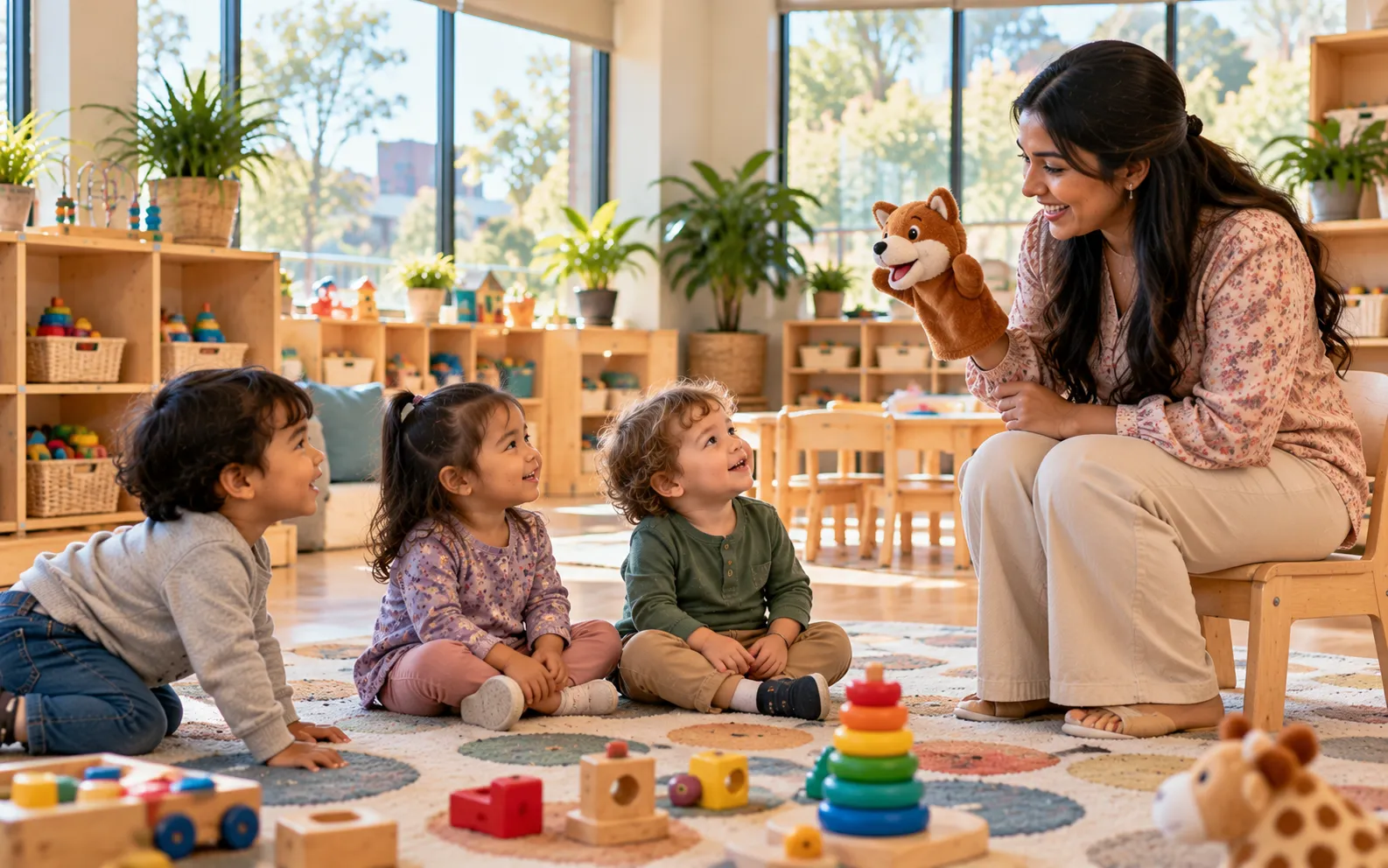
The course is built around real classroom and home-daycare situations. Here are a few examples of how the training applies:
A child arrives with a fever and a runny nose. Providers learn how to apply exclusion policies, limit the spread of germs, and communicate with parents in a way that protects the other children.
A diapering area sits next to a snack counter. Environmental sanitation training covers how to separate diapering, toileting, and food preparation areas, and how to clean and disinfect each one properly.
Cleaning products leave a strong smell in a small playroom. The course discusses air quality and choosing products that clean effectively without unnecessary exposure for young children.
Outdoor play areas have hidden hazards. Providers learn to look for risks that lead to falls, burns, poisoning, and choking, which matters in Carmichael yards with mature trees, pools, and garden areas.
Health paperwork falls behind. Organized immunization records and health forms help both licensing compliance and quick decisions during an outbreak.
Lead Exposure and Young Children in Older Neighborhoods
Lead poisoning is especially concerning for children under six. They absorb lead more easily than adults, they regularly put hands and toys in their mouths, and their developing brains are sensitive to its effects. Many children with elevated lead levels show no obvious signs, so prevention and testing are the main protections.
Carmichael is an established community, and parts of it include homes built before the 1978 federal ban on lead-based residential paint. For a Family Child Care Home in an older house, peeling paint, window-friction dust, and remodeling debris deserve careful attention. Lead can also come from soil, certain imported spices, cosmetics, ceramic dishware, and older toys or jewelry.
The preventive health course teaches providers to:
- Recognize common lead sources in homes and play areas
- Reduce dust through wet cleaning and frequent handwashing
- Encourage families to ask their child’s doctor about blood lead testing
Sacramento County operates a Childhood Lead Poisoning Prevention Program that offers education and environmental investigations, and it provides free educational materials.
Feeding Children Well: Nutrition in the Preventive Health Course
Nutrition affects nearly every part of the childcare day, from breakfast to afternoon snacks. The nutrition part of the course gives providers practical guidance on:
- Food allergies: Preventing cross-contact, reading labels, and following written allergy action plans
- Specialized diets: Accommodating medical, religious, and family food requirements
- Diabetes considerations: Understanding why consistent meal and snack schedules matter for some children
- Developmental stages: Offering safe textures and portions for infants, toddlers, and preschoolers
- Growth and feeding concerns: Noticing eating patterns that may be worth discussing with parents
- Dental health: Limiting sugary drinks and supporting healthy habits early
Providers who serve meals under food programs or prepare meals at home benefit from this foundation, and so do center staff who supervise mealtimes.
Who Typically Enrolls From the Carmichael Area
Carmichael’s residential character supports a mix of home-based and center-based childcare. People who commonly look for this course include:
- Prospective Family Child Care Home licensees preparing to open a home daycare
- Teachers and directors at preschools and childcare centers across northeast Sacramento
- Early childhood education students, including those studying at nearby American River College or Sacramento State
- Healthcare-adjacent workers, such as employees near Mercy San Juan Medical Center, who want childcare-related training for a career change or side business
- Nannies, babysitters, and parents who want structured preventive health knowledge
Colleges, employers, and hospitals set their own policies. Taking this course does not mean an institution requires or accepts it, so check with your program or employer directly.
Serving Fair Oaks, Citrus Heights, and Nearby Communities
The Rutland Drive center is in Carmichael, which places it among several northeast Sacramento County communities. Childcare professionals from Fair Oaks, Citrus Heights, Orangevale, Arden-Arcade, Rancho Cordova, Gold River, and Sacramento may find the Carmichael location a convenient choice for EMSA Preventive Health and Safety training.
Main routes such as Fair Oaks Boulevard, Manzanita Avenue, Marconi Avenue, and Madison Avenue connect Carmichael with nearby neighborhoods. Providers south of the American River, in the Rancho Cordova and Gold River area, can also reach the community.
Training With Safety Training Seminars in Carmichael
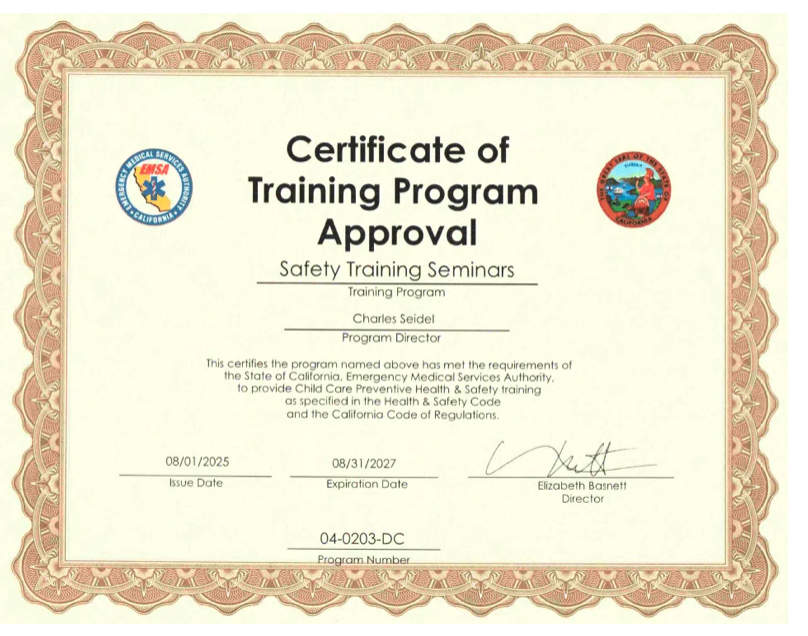
Safety Training Seminars provides EMSA Preventive Health and Safety training for California childcare providers. The course includes the required nutrition and lead poisoning prevention content. According to the provider, the course carries EMSA approval (0204-DC), and the completion card does not expire.
Many Carmichael-area providers complete preventive health training and Pediatric First Aid/CPR around the same time. Having both options from one provider can make it easier to meet licensing requirements.