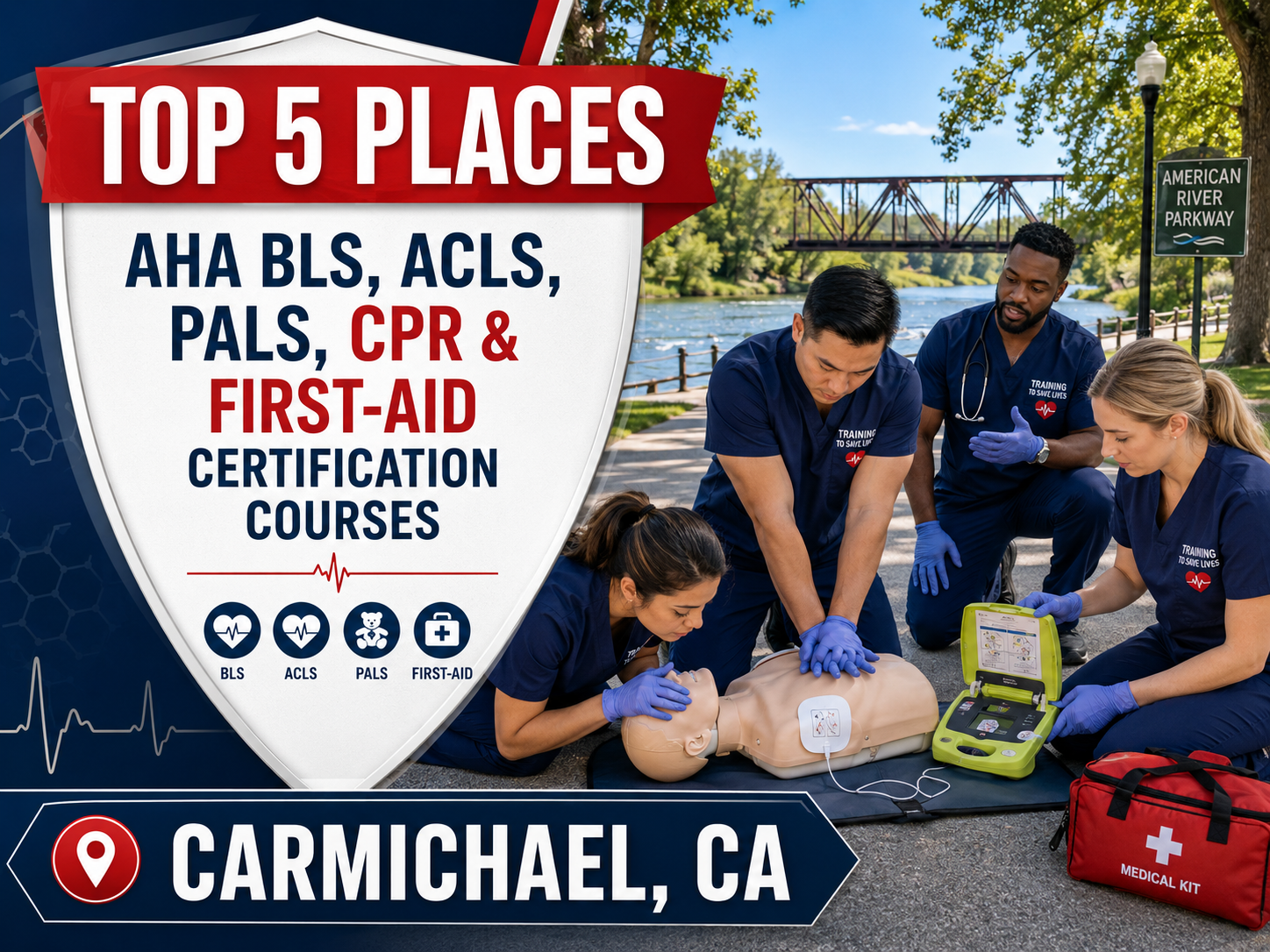
The American River Parkway draws thousands of outdoor enthusiasts to Carmichael each week. Whether you spend your weekends cycling along the Jedediah Smith Memorial Trail, running near the Effie Yeaw Nature Center, or riding horses through local oak woodlands, outdoor recreation comes with inherent remote-safety risks. A sudden cardiac arrest, heat-related collapse, or trail injury miles away from a main road requires immediate intervention before emergency medical services arrive.
Getting certified in CPR and First Aid provides outdoor enthusiasts and local residents with the practical skills needed to handle unexpected medical emergencies along the trail or at home. Knowing which course aligns with your specific activity, workplace mandate, or family needs ensures you spend your time learning the exact skills required for your situation.
Key Takeaways: Outdoor recreation along remote stretches of the Parkway requires immediate lay-responder intervention during sudden cardiac or traumatic emergencies. Selecting the correct training course depends on whether you need general lay-responder First Aid skills or formal healthcare provider credentials like Basic Life Support (BLS).
Why Trail and Outdoor Safety in Carmichael Demands Hands-On CPR Skills
Emergency responders face unique access challenges when responding to calls along the river corridor. Ambulances cannot always drive directly to a fallen runner on a dirt trail or an injured rider in an equestrian staging area. First responders often rely on specialized off-road vehicles or must park at main access points like Ancil Hoffman Park and proceed on foot.
During the initial minutes of sudden cardiac arrest, blood flow to vital organs drops rapidly. Immediate high-quality chest compressions maintain systemic circulation until an Automated External Defibrillator (AED) can deliver a shock to restore a normal heart rhythm. For active families, endurance athletes, and trail enthusiasts in Carmichael, holding a valid training credential translates directly into situational readiness when help is several minutes away.
Deciding Which CPR or First Aid Course You Need
Training options range from general community safety classes to rigorous clinical certifications. Selecting the wrong class can result in wasted time or a certificate that your employer or licensing board will not accept.
Heartsaver CPR AED & First Aid for Community Members
This level of training targets individuals without clinical medical backgrounds. It is designed for:
- Cyclists, trail runners, and outdoor group leaders
- Equestrian families and barn managers
- Youth sports coaches, teachers, and daycare staff
- Parents and community volunteers
The curriculum covers adult, child, and infant CPR, proper AED operation, relief of choking, and basic first aid care for bleeding, fractures, and environmental emergencies like heatstroke.
Basic Life Support (BLS) for Healthcare and Rescue
If you are a clinical professional, nursing student, EMT, or healthcare worker, you must complete a formal BLS CPR Certification Course. BLS instruction focuses on team-based resuscitation, high-quality chest compressions, bag-valve-mask (BVM) ventilation, two-thumb infant technique, and advanced airway management scenarios.
What to Expect During Hands-On Skill Practice
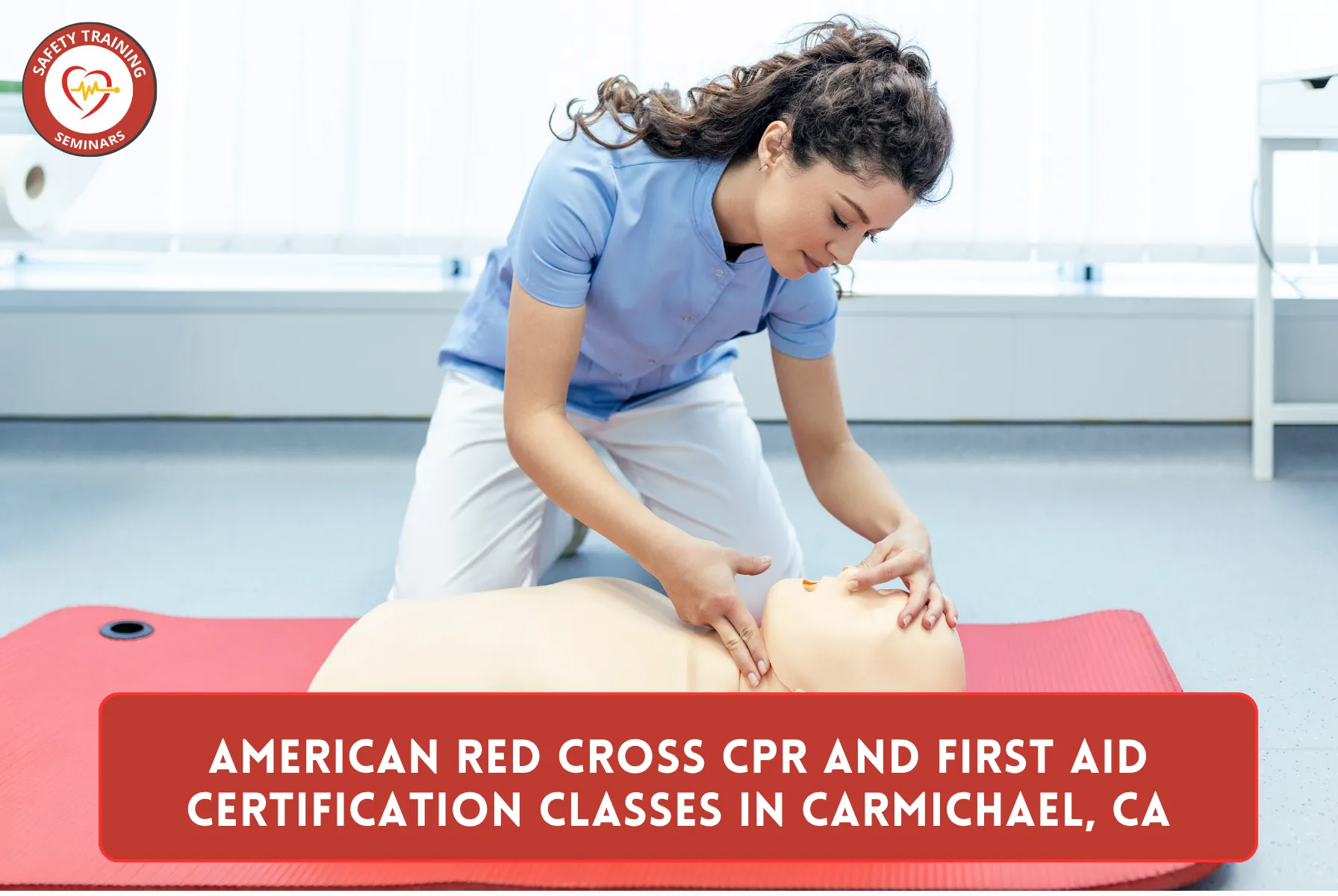
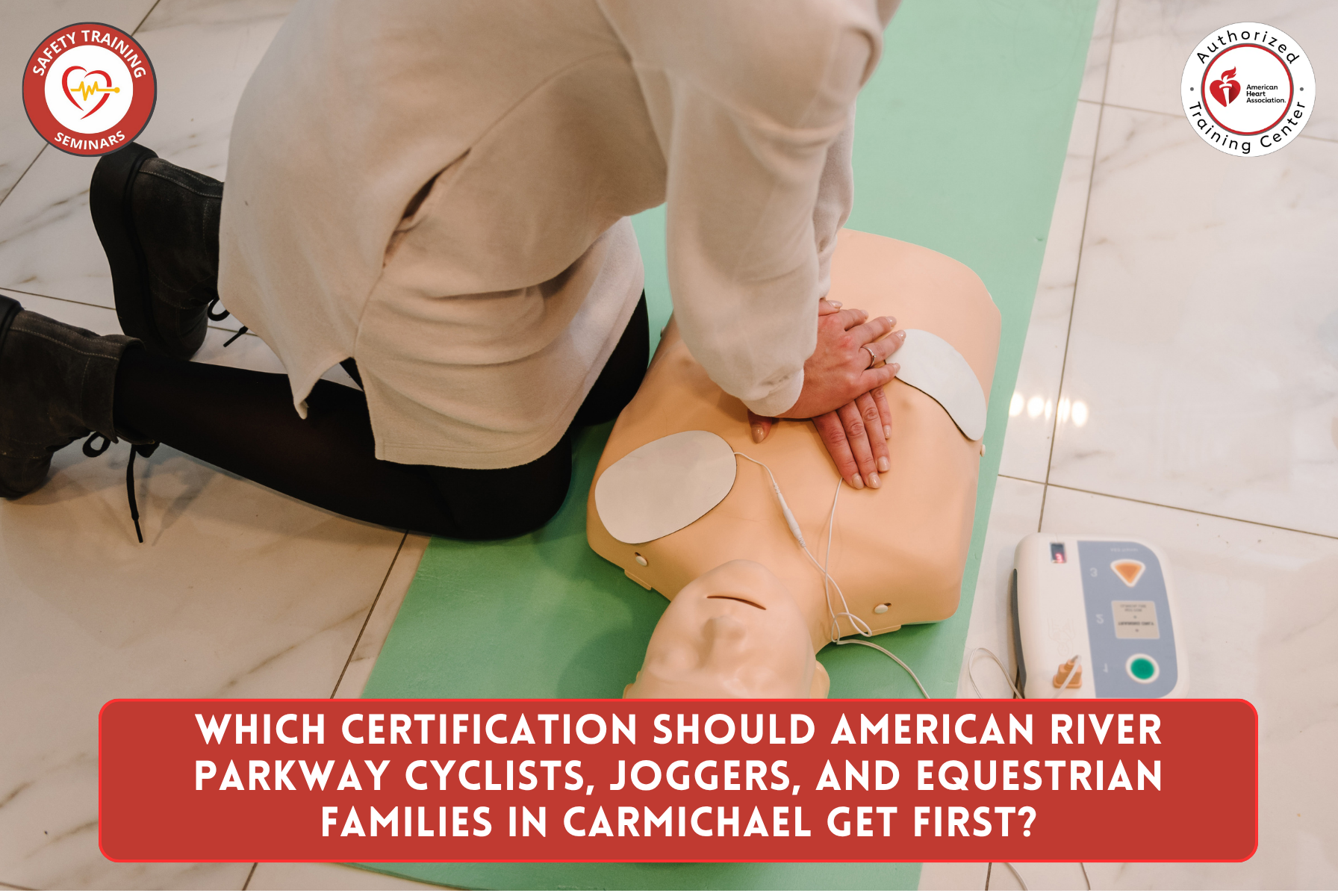
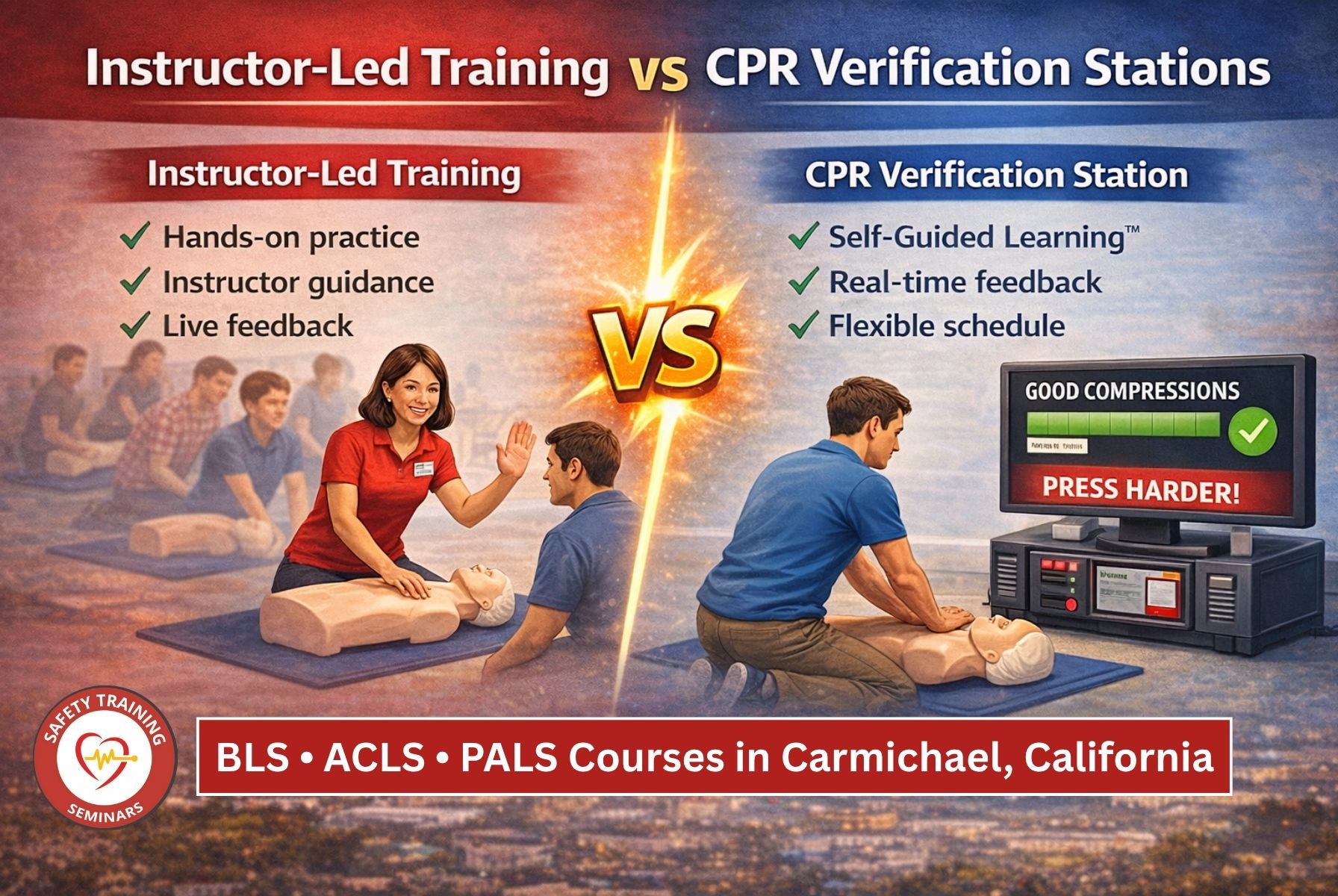
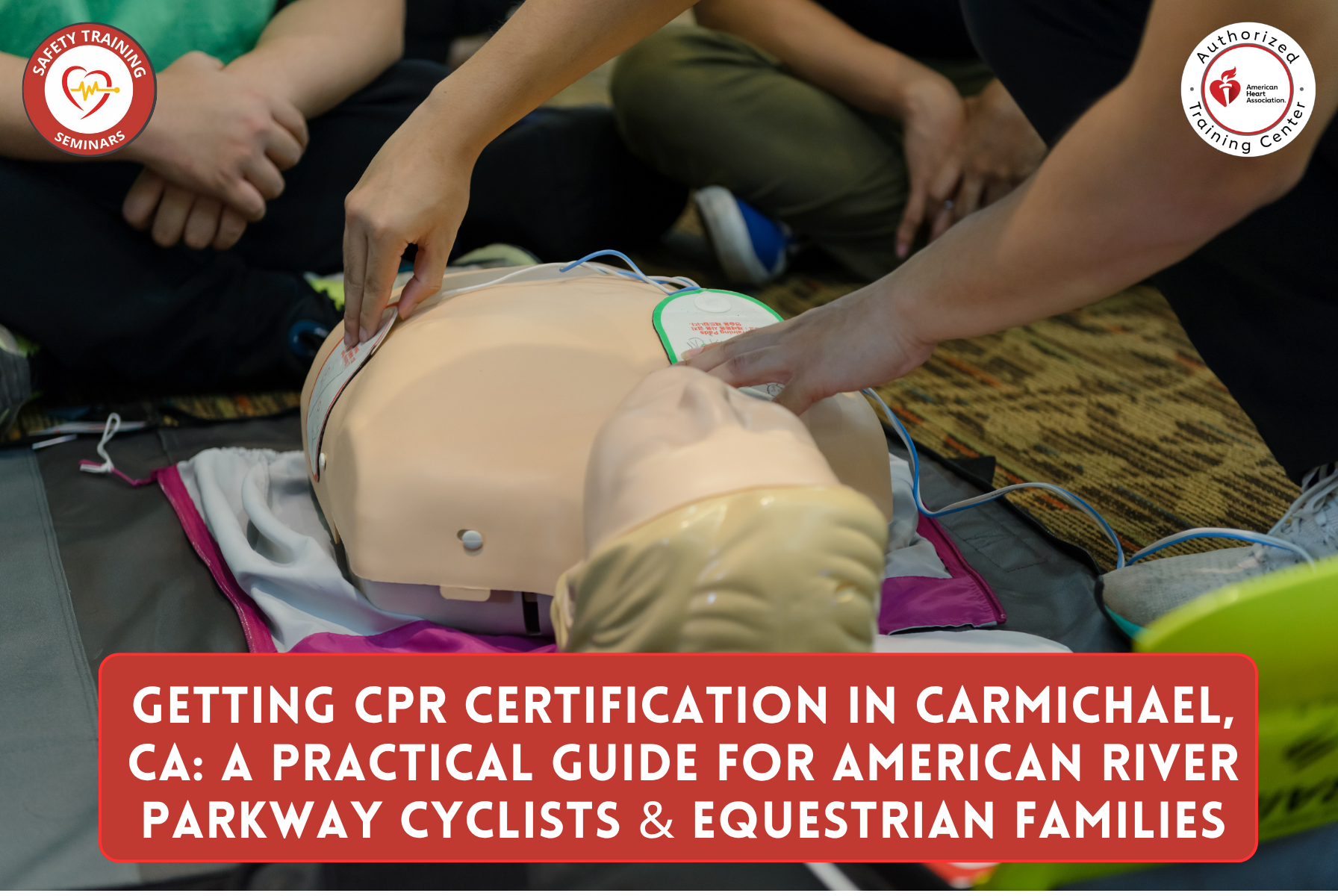
Modern CPR training emphasizes interactive, physical skill practice over passive lecture viewing. Whether you complete a blended online module prior to class or attend a fully instructor-led session, you will practice physical techniques on feedback mannikins.
Hands-on practice ensures proper hand placement, body alignment, depth control, and compression rate. Interactive mannikins provide real-time visual or audio feedback on your compression depth and chest recoil, building muscle memory that holds up under real-world pressure.
Essential First Aid Skills for Parkway Users and Active Families
While CPR addresses sudden cardiac arrest, general first aid addresses injuries and illness commonly encountered during outdoor activity in Northern California.
Traumatic Injuries and Severe Bleeding
Falls from bicycles, horse dismounts, or rough terrain stumbles can cause soft tissue injuries or fractures. First aid courses teach direct pressure techniques, pressure bandage application, and tourniquet use for severe arterial bleeding.
Heat-Related Emergencies
Temperatures along the American River basin frequently rise during summer months. Training prepares responders to recognize the progression from heat exhaustion to heatstroke—a life-threatening condition requiring immediate rapid cooling and emergency medical response.
Choking Relief Across All Ages
Choking can occur quickly during family picnics or trail snacks. Instruction covers the Heimlich maneuver for adults and children, as well as back slaps and chest thrusts for infants.
Choosing a Legitimate CPR Certification Provider
Not all CPR certificates carry equal weight. Many online-only programs claim to issue instant cards, but most California employers, athletic leagues, and healthcare boards reject certifications that lack an in-person physical skills evaluation.
When evaluating local options, verify the following:
- In-Person Verification: Ensure the course includes hands-on practice on physical mannikins under instructor supervision.
- Official Certification Cards: Confirm whether your employer requires an official American Heart Association (AHA) or equivalent card.
- eCard Delivery: Confirm how quickly you will receive your digital certificate after completing class.
- Course Requirements: Review your specific workplace, academic, or licensing regulations before enrolling.
If you live in nearby communities like Fair Oaks, Gold River, or Arden-Arcade, choosing a dedicated local training facility ensures seamless class scheduling and quick certification renewal.
Safety Training Seminars in Carmichael
Residents, healthcare workers, and active families looking for accredited training can access local scheduling through Safety Training Seminars. Located in central Sacramento County, the classroom provides flexible scheduling options for initial certifications and renewals.
Local Address:
Safety Training Seminars Carmichael CPR Training Center, 6020 Rutland Drive, Suite 23, Carmichael, CA 95608
The Rutland Drive facility serves participants throughout Carmichael and surrounding areas, including Antelope, Foothill Farms, La Riviera, Florin, and Fair Oaks. Students can select traditional classroom formats or blended learning options that allow them to complete theoretical work online before attending a quick, focused in-person skills session.
If you are a clinical professional needing advanced credentials, explore ACLS certification training or search for nearby PALS classes for healthcare professionals to fulfill hospital credentialing requirements. Additionally, those looking for comprehensive emergency skills can register for local CPR and First Aid certification courses to prepare for unexpected incidents on the trail or at home.
Frequently Asked Questions
How long does a CPR and First Aid certification remain valid?
Standard CPR and First Aid course completion cards are valid for two years from the end of the month in which the class was completed. To maintain continuous certification without a gap, plan to complete a renewal course before your expiration date.
Do employers accept online-only CPR certificates?
Most healthcare employers, school districts, daycare regulators, and OSHA-monitored workplaces do not accept online-only certificates. Legitimate certification bodies require an in-person physical skills evaluation on mannikins to verify practical competency.
What should I wear to a hands-on CPR class?
Wear comfortable, casual clothing that allows you to kneel on the floor comfortably and move your arms freely. You will spend significant time performing chest compressions on mannikins placed at floor or table levels.
How quickly will I receive my certification card after class?
Safety Training Seminars issues digital eCards shortly after class completion. Students typically receive an email with instructions to claim and download their official eCard on the same day or within one business day of passing the course.
Preparing for Your CPR Training Session
Taking a few simple steps before attending your class ensures a smooth learning experience:
- Confirm Your Course Selection: Double-check whether your employer or school requires Heartsaver or BLS.
- Complete Online Pre-Work (Blended Option): If you choose blended learning, complete all online modules and print or save your completion certificate before arriving at the skill center.
- Arrive Early: Plan to arrive 10 to 15 minutes before your scheduled start time to check in and settle into your station.
Taking the initiative to learn high-quality CPR and First Aid equips you to act decisively when medical emergencies arise along the American River Parkway, at local sports fields, or in your own home. Review class options through Safety Training Seminars to secure an upcoming session at the Carmichael location.